Can You Rank in SEO and AEO at the Same Time?
Everyone told me you have to choose. Optimize for Google’s blue links, or optimize for AI assistants — different systems, different rules, pick a lane.
So I ran the test on my own site. Here’s what came back.
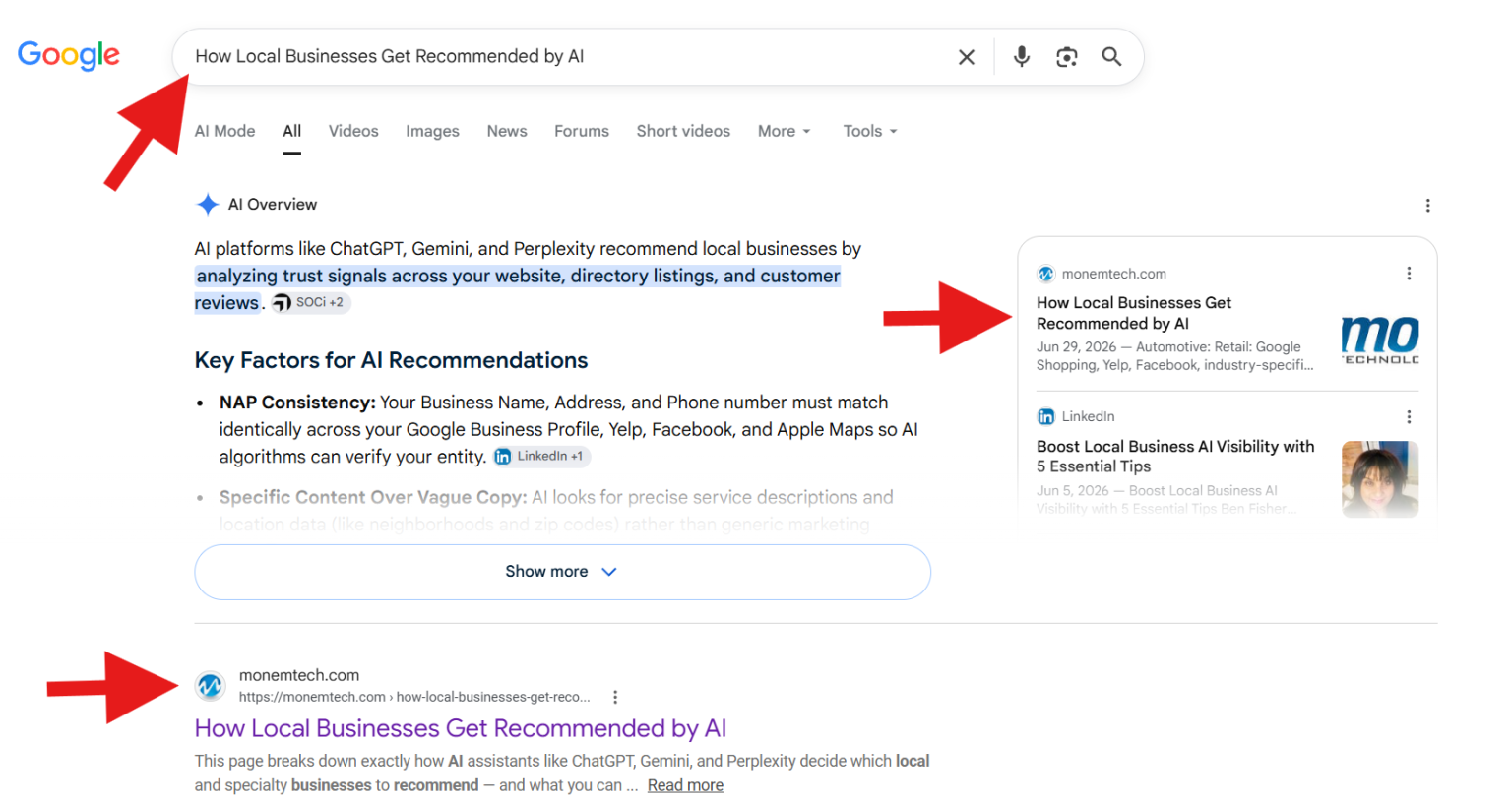
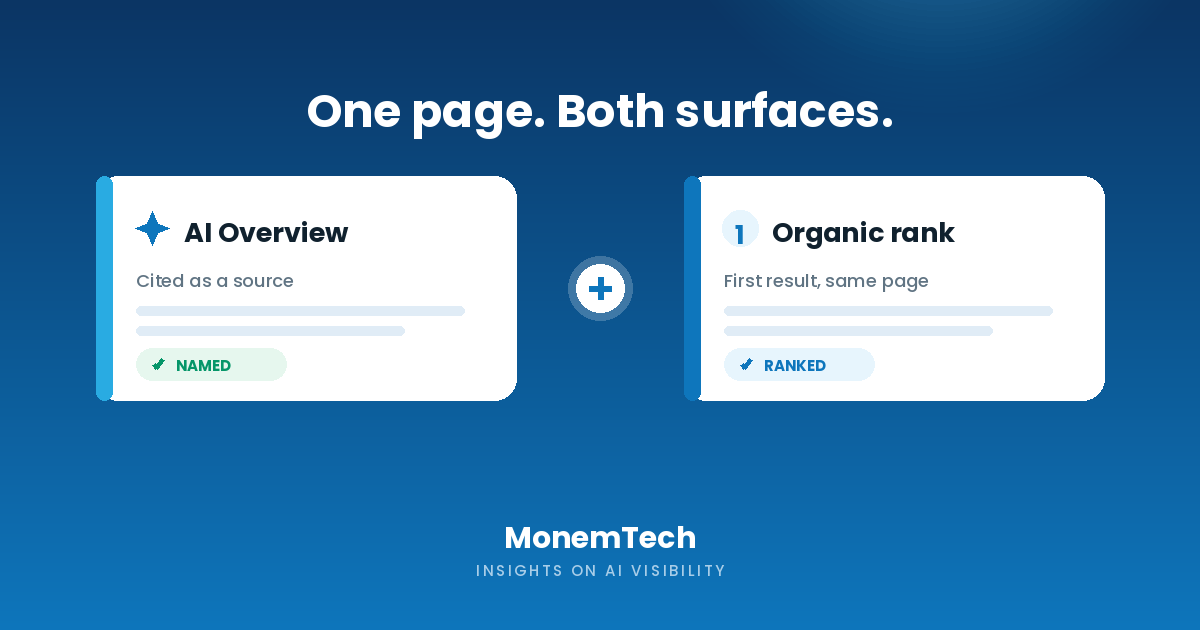
Same page. Same content. Cited by Google’s AI Overview and ranked first in the traditional results directly below it. Not two strategies competing for attention — one foundation showing up twice.
Let’s break down exactly what’s happening in that screenshot, and why it matters for your business.
What you’re actually looking at
Two separate systems returned the same page for the same query. Zoomed in, here’s each one.
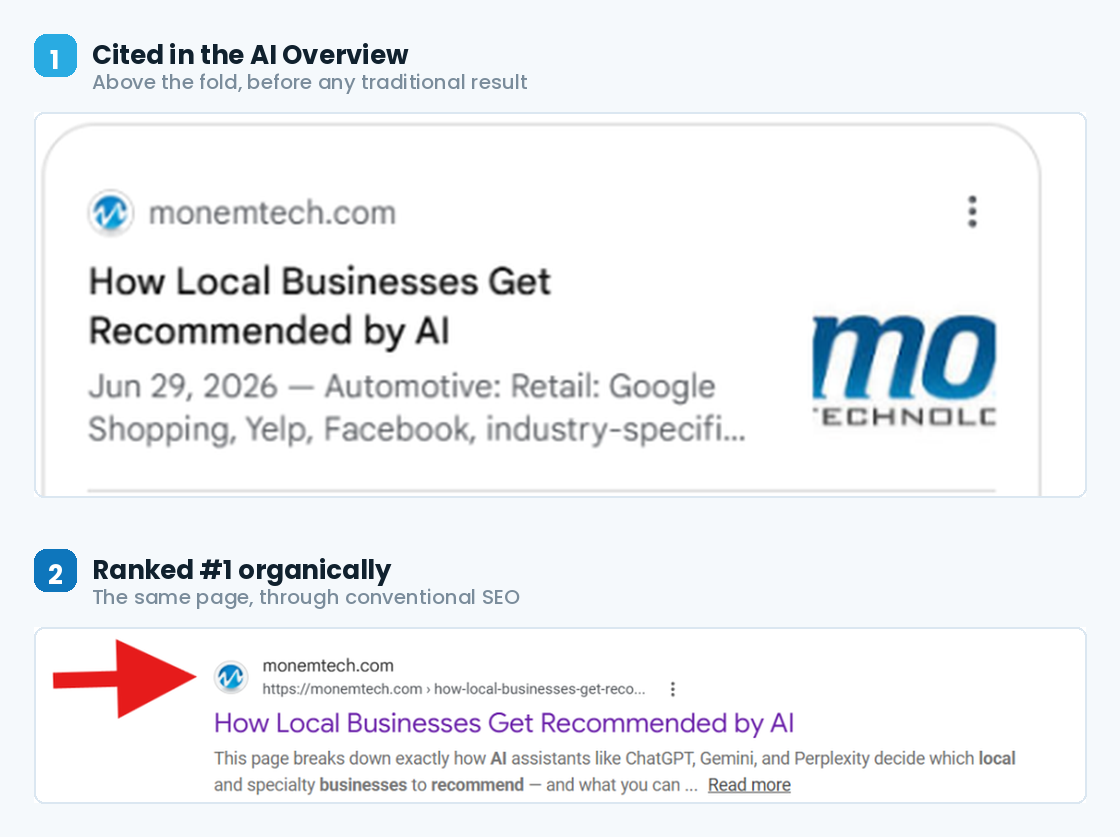
Why this matters: The AI Overview appears above everything. If you’re only ranked organically, an AI answer can push you below the fold and absorb the click. If you’re only cited in AI, you miss everyone who scrolls past the answer box. Occupying both is what protects your visibility as search shifts.
The myth: SEO and AEO are a tradeoff
The assumption goes like this — traditional SEO is about keywords, backlinks, and rankings, while answer engine optimization is about being quotable by a language model. Two different targets, so you split your budget or pick one.
That’s wrong, and the reason is structural.
Gets you into the index
Crawlable pages, relevant content, credible links, technical health. This determines whether Google considers your page a legitimate answer at all.
Gets you quoted from it
Structured data, question-shaped content, specific extractable claims. This determines whether the AI can lift a confident sentence from your page.
The second one depends on the first. Google’s AI Overviews draw from the same index that produces organic rankings. If your page isn’t indexed, trusted, and relevant, it isn’t a candidate for citation either. Solid SEO isn’t a competing investment — it’s the entry ticket.
What tips a page into the AI answer
Being eligible isn’t enough. Plenty of well-ranked pages never get cited. From building this one, four things made the difference.
- Structured data that states the obvious. Schema markup tells the machine what the page is, who wrote it, and what questions it answers — no inference required. Most local business sites have none, or have it half-implemented.
- Content shaped like questions. Headings that match what people actually ask, followed by direct answers. AI systems are looking for a clean question-and-answer pair to lift. Give them one.
- Specific claims over marketing copy. “We treat ACL tears and rotator cuff injuries” is extractable. “Comprehensive orthopedic care” is not. Precision that helps a human decide is the same precision a machine can quote.
- Consistency everywhere else. Name, address, and phone matching exactly across your Google Business Profile, directories, and industry listings. Mismatches — even “St.” versus “Street” — reduce the confidence a model has in naming you.
The compounding part: a citation in the AI Overview drives clicks. Clicks reinforce the organic ranking. A stronger ranking keeps you eligible for the citation. Get in early and the two surfaces feed each other — which is exactly why the businesses building this now are hard to displace later.
Where most local businesses stand right now
Here’s the honest state of things: the majority of local and specialty business websites have no schema markup, generic service descriptions, and inconsistent listings. They rank on domain age and a Google Business Profile, and they’re invisible to AI assistants.
That’s not a criticism — it’s an opening. The bar for showing up in AI answers is currently low, and the businesses that clear it are claiming positions that get harder to take back every month.
How to check where you stand
Four things you can do this week, no consultant required:
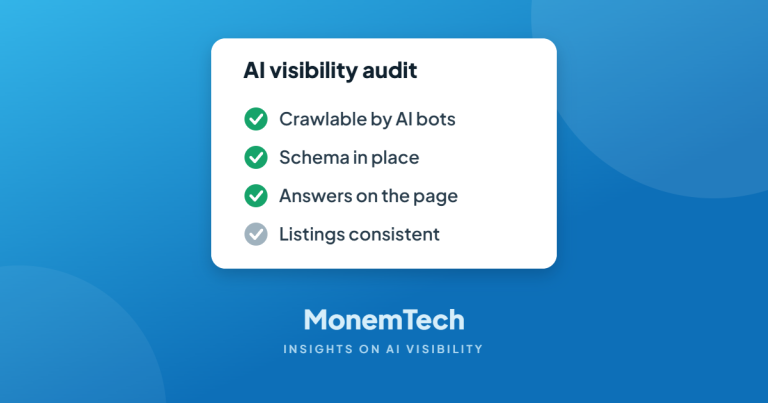
- Search your own category. Type “best [your business type] in [your city]” into ChatGPT, Gemini, and Google. See who gets named. Note whether it’s you.
- Check your schema. Run your homepage through Google’s Rich Results Test. Most sites come back with nothing, or with errors.
- Audit your NAP. Compare your name, address, and phone across your website, Google Business Profile, and your top three directories. Fix every mismatch.
- Read your own service page. Does it name specific services, conditions, or specialties — or does it describe you in general terms a machine can’t quote?
Want to see where AI says you stand?
I’ll personally run your site through the AI engines your customers are using, and show you exactly where you show up, where you don’t, and what to fix first. No cost, no jargon, no obligation.